Crypto lending limits to account for
The crypto lending landscape has shifted from open, uncollateralized loans to strict, collateralized systems. This change drives down yields and forces lenders to prioritize capital preservation over high returns. Understanding these constraints is essential for navigating the current market safely.
Collateral Requirements
Lenders now demand over-collateralization to mitigate volatility risk. Borrowers must lock up more value than they receive, often at 110% to 150% loan-to-value (LTV) ratios. This buffer protects lenders if the asset price drops sharply. However, it ties up significant capital, reducing the effective liquidity for borrowers. If the collateral value falls below the maintenance threshold, automated liquidations occur, potentially wiping out the borrower’s position.
Regulatory Scrutiny
Regulatory pressure has forced platforms to implement strict Know Your Customer (KYC) and Anti-Money Laundering (AML) checks. This reduces privacy and increases onboarding friction. The IRS treats crypto lending as a taxable event, requiring detailed reporting of interest income and collateral movements. Platforms must navigate complex accounting standards, such as ASC 860, which classify crypto assets as intangibles. This compliance burden has led to the shutdown of several major lenders, leaving fewer options for retail users.
Yield Compression
With reduced risk tolerance, yields have compressed significantly. Traditional high-yield offers of 10-20% APY are largely gone, replaced by rates closer to 1-5% for stablecoins. This shift reflects the real cost of capital and the premium for risk. Borrowers can still access funds, but the cost of borrowing has risen. Lenders must carefully assess counterparty risk, as platform insolvency remains a primary threat. Diversifying across multiple reputable platforms is now a standard risk management strategy.
Crypto lending choices that change the plan
Crypto lending is not a simple savings account. It is a structured financial agreement that balances yield potential against specific, often opaque, risks. When you lend crypto or borrow against it, you are navigating a complex web of counterparty exposure, regulatory uncertainty, and market volatility. Understanding these mechanics is essential before committing capital.
The tradeoff begins with how the asset is treated. Unlike traditional bank deposits, crypto loans are often classified as intangible assets by regulators, including the SEC and the IRS. This classification impacts how lenders account for the loan and how borrowers report interest payments. It also means that in the event of a platform failure, your claim may be treated differently than a standard debt obligation in a bankruptcy proceeding.
Liquidity and Access
Most crypto lending platforms lock your funds for a fixed term. You cannot withdraw your principal or accrued interest on demand. This illiquidity is the price you pay for higher yields. If you need cash during a market downturn, you are stuck. In contrast, borrowing against your crypto (crypto-backed lending) allows you to access liquidity without selling your holdings, but it introduces the risk of liquidation if the collateral value drops sharply.
Counterparty Risk
When you lend to a centralized platform, you are trusting their solvency and security practices. Unlike a bank, most crypto lending platforms do not offer FDIC insurance. If the platform is hacked, mismanages funds, or collapses—as seen with FTX and Celsius—your funds may be lost entirely. Decentralized Finance (DeFi) protocols reduce counterparty risk by using smart contracts, but they introduce new risks like code vulnerabilities and oracle failures. Always check the platform’s audit history and reserve proofs.
Regulatory and Tax Complexity
The regulatory landscape for crypto lending is fragmented and evolving. In the U.S., the IRS treats crypto lending interest as taxable income. Borrowing against crypto is generally not a taxable event, but selling the collateral to cover a margin call is. Failure to report this income can lead to audits. Additionally, new regulations may restrict how platforms operate or report user activity, potentially affecting your ability to withdraw funds or access your account.
Yield vs. Inflation
High yields in crypto lending often signal high risk. A 10% APY might look attractive, but if your stablecoin loses 5% of its purchasing power due to inflation or de-pegging, your real return is significantly lower. Always compare the nominal yield against the underlying asset’s stability. Lending volatile assets like Bitcoin or Ethereum for stablecoin yields can result in significant principal loss if the asset’s value drops faster than the interest accrues.
| Factor | Centralized (CeFi) | Decentralized (DeFi) |
|---|---|---|
| Insurance | Rarely (no FDIC equivalent) | None (smart contract risk) |
| Liquidity | Fixed terms, early withdrawal fees | Variable, depends on pool depth |
| Transparency | Opaque reserve audits | On-chain, public ledger |
| Regulatory Risk | High (platform shutdown risk) | Medium (protocol upgrade risk) |
| Yield Potential | Moderate to High | High to Variable |
How to choose the right crypto lending path
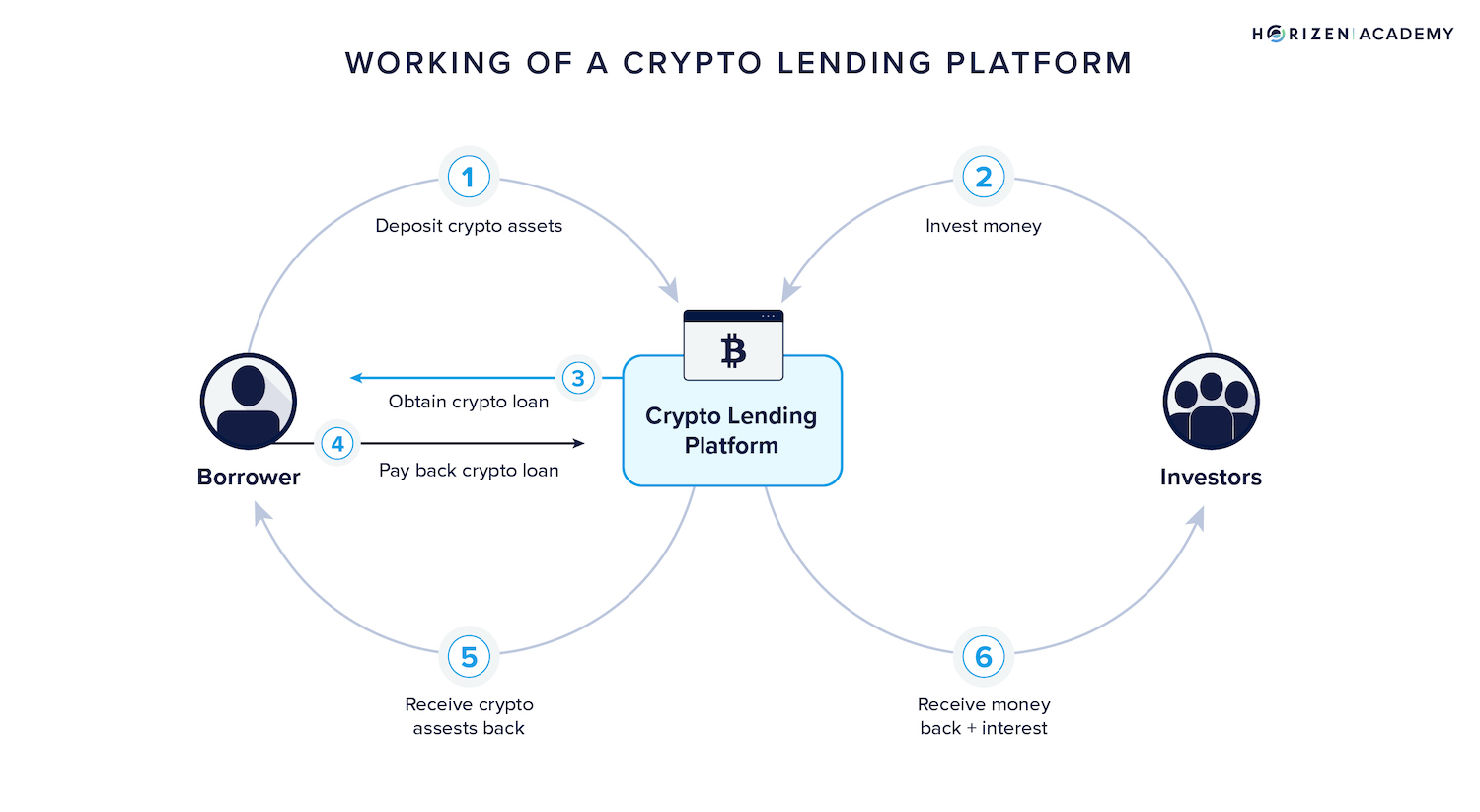
Crypto lending is no longer a binary choice between holding and selling. The infrastructure has shifted toward structured platforms that offer distinct risk profiles. You can lend idle assets for yield, or borrow against your holdings to access liquidity without triggering a taxable event. Choosing the right path requires matching your goal to the platform's mechanics.

Are you seeking yield on idle assets or liquidity for active trading? Yield seekers should look for platforms with transparent reserve audits and stablecoin options. Borrowers need high loan-to-value (LTV) ratios and low liquidation thresholds to protect their collateral from market volatility.
Not all lenders hold your assets in segregated wallets. Read the fine print to understand if the platform uses custodial solutions or decentralized smart contracts. Look for proof of reserves and regular security audits. Avoid platforms that commingle user funds with proprietary trading desks.
High yields often signal high risk or unsustainable tokenomics. Compare the annual percentage yield (APY) against stable savings accounts and government bonds. If the yield is significantly higher than the risk-free rate, assume the principal is at risk. A sustainable yield usually tracks the underlying asset's staking rewards or lending demand.
Lending income is generally taxable in most jurisdictions. Borrowing against crypto is usually not a taxable event unless you fail to repay and the collateral is seized. Keep detailed records of all interest payments and transaction hashes. Consult a tax professional to understand how lending fits into your broader financial strategy.



As an Amazon Associate, we may earn from qualifying purchases.
The best platform depends on your risk tolerance and technical comfort. Beginners should start with regulated, custodial platforms that offer insurance coverage. Advanced users may prefer decentralized finance (DeFi) protocols for higher yields and greater control, provided they understand the smart contract risks.
Spotting Weak Options and Misleading Claims
The crypto lending landscape has shifted from a wild west of guaranteed yields to a more regulated, infrastructure-heavy market. For 2026, the primary risk isn't just market volatility but the structural integrity of the platforms offering these products. Many platforms still advertise yields that don't reflect the underlying asset's performance, masking the true cost of borrowing or the risk of the counterparty.
High Leverage, Hidden Risks
One of the most common mistakes borrowers make is over-leveraging against volatile assets like Bitcoin or Ethereum. While borrowing against your crypto allows you to access liquidity without selling, excessive leverage can lead to liquidation events that wipe out your principal. Always check the loan-to-value (LTV) ratios and maintenance margin requirements. A 50% LTV is standard for major coins; anything higher significantly increases your risk of losing your collateral during a market dip.
Platform Solvency and Transparency
Not all lending platforms are created equal. Some operate as opaque black boxes, making it difficult to verify their solvency or the safety of your funds. Look for platforms that publish regular proof-of-reserves audits and maintain clear regulatory compliance. The absence of transparent auditing is a major red flag. If a platform cannot provide verifiable data on its reserves and liabilities, it is a weak option that could fail during market stress.
Tax Implications of Lending
Lending crypto often triggers taxable events. In many jurisdictions, receiving interest or rewards from lending is treated as ordinary income. Additionally, if you borrow against your crypto and the loan is repaid in a different asset or currency, you may incur capital gains taxes. Understanding the tax treatment in your jurisdiction is essential to avoid unexpected liabilities. Consult a tax professional to ensure you are compliant with local regulations.
Regulatory Uncertainty
The regulatory environment for crypto lending is still evolving. Changes in laws regarding securities, money transmission, and banking can impact the availability and safety of lending products. Platforms operating in jurisdictions with unclear regulations may face sudden shutdowns or restrictions. Staying informed about regulatory developments helps you choose platforms that are likely to remain operational and compliant in the long term.
Crypto lending: what to check next
Before committing capital, address the practical mechanics, tax implications, and risks inherent in crypto lending. The infrastructure has shifted toward regulated custodians, but the core tradeoffs remain: yield versus counterparty exposure.
Can the IRS see your crypto wallet?
Yes. The IRS treats crypto as property and requires reporting on taxable events. Under the Infrastructure Investment and Jobs Act, brokers must file Form 1099-B for certain transactions. While non-custodial wallets lack direct reporting, the IRS has broad authority to request data from exchanges and can use blockchain analysis to trace activity. Ignorance of tax rules is not a defense; consult a tax professional for your specific jurisdiction.
Can I borrow against my XRP?
Liquidity options for XRP vary by platform. Major centralized exchanges like Binance often list XRP as eligible collateral, allowing you to borrow stablecoins or other assets against your holdings. However, the Loan-to-Value (LTV) ratio for XRP is typically tighter—often 50-60%—compared to Bitcoin or Ethereum, reflecting its higher volatility. Always check the specific collateral matrix of your lending provider before depositing XRP.
What is the best crypto lending platform?
There is no single "best" platform; the right choice depends on your risk tolerance and asset type. For institutional-grade security, look for platforms with proof of reserves and regulatory compliance (e.g., Coinbase Prime, Kraken). For higher yields, decentralized finance (DeFi) protocols offer permissionless access but introduce smart contract risk. Evaluate platforms based on their insurance funds, historical uptime, and whether they are custodial (you trust the platform) or non-custodial (you manage keys).
Is crypto lending risky?
Crypto lending carries distinct risks beyond market volatility. The primary danger is counterparty risk: if the lending platform fails or is hacked, you may lose your principal entirely, as seen in the collapse of Celsius and Voyager. Additionally, smart contract bugs in DeFi protocols can lead to total loss. Unlike bank deposits, crypto lending is generally not FDIC-insured. Only allocate capital you can afford to lose and diversify across multiple protocols or institutions.
No comments yet. Be the first to share your thoughts!