How crypto lending works
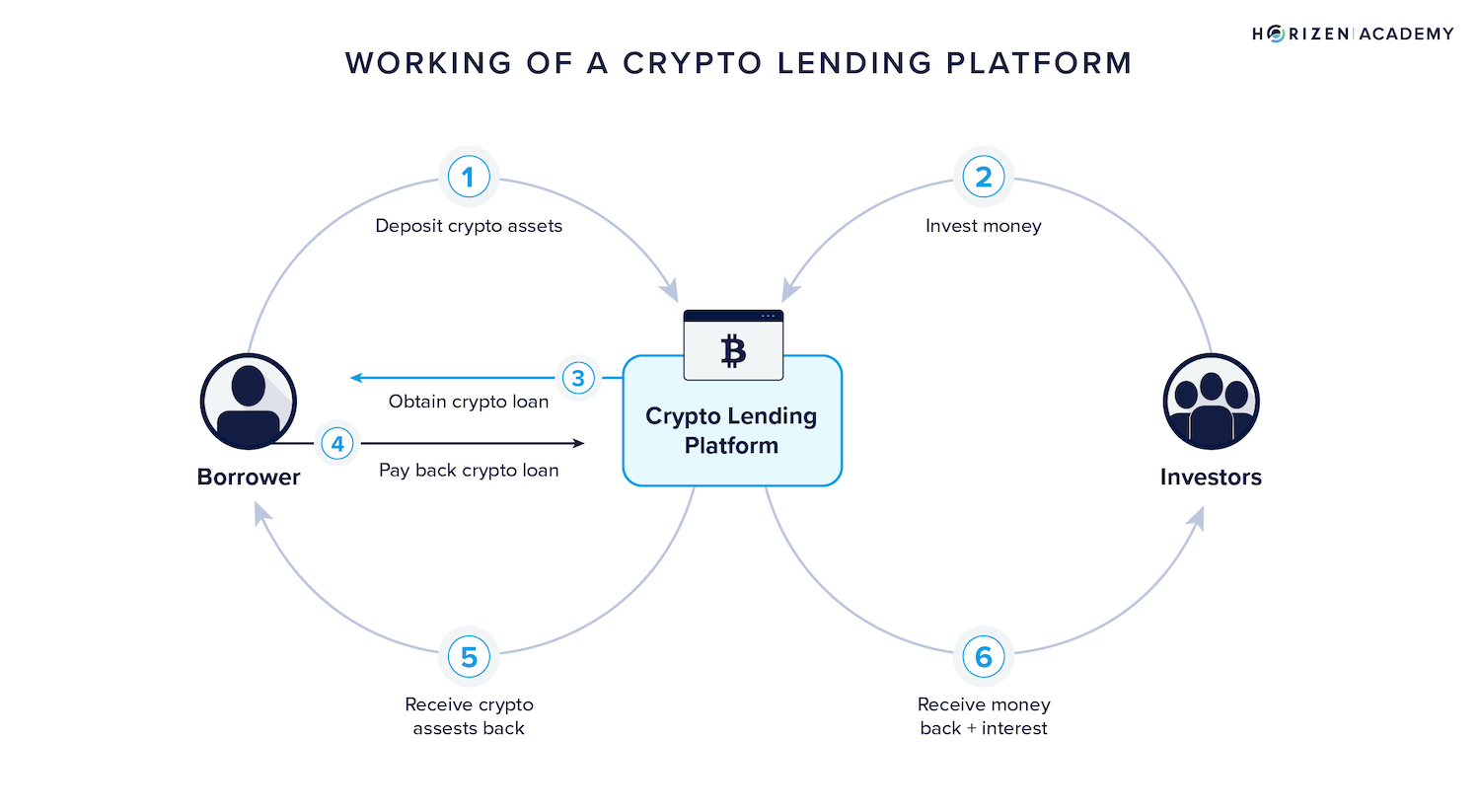
Crypto lending is a financial transaction where one party lends cryptocurrency to another in exchange for compensation. This mechanism splits into two distinct paths: earning yield on idle assets or borrowing against your holdings to access liquidity without selling.
When you lend crypto, you are essentially acting as the bank. You deposit assets like Bitcoin or Ethereum into a lending protocol or platform, which then lends them out to borrowers. In return, you earn interest, often paid in the same asset or a stablecoin. This allows you to generate returns on assets you might otherwise just hold in a wallet. It is important to understand that this is not the same as staking or yield farming; it is a direct lending arrangement where you are paid a fee for the use of your capital.
Borrowing, on the other hand, involves using your cryptocurrency as collateral to secure a loan. You do not sell your crypto; instead, you lock it up as security while receiving funds in a traditional currency like USD or a stablecoin like USDC. This is useful if you need cash for living expenses or investment opportunities but want to maintain your long-term exposure to the asset. If the value of your collateral drops significantly, you may face a margin call or liquidation, so risk management is critical.
Both approaches carry unique risks, including smart contract vulnerabilities and market volatility. Unlike traditional banks, crypto lending platforms often lack deposit insurance, meaning your assets are not protected if the platform fails. Understanding these mechanics is the first step in deciding which strategy aligns with your financial goals and risk tolerance.
Top crypto lending platforms to consider
Choosing a platform for crypto lending comes down to one trade-off: convenience versus control. Centralized exchanges (CeFi) act like traditional banks. They handle custody and compliance, making it easy to start earning interest or borrowing against your assets. Decentralized protocols (DeFi) remove the middleman. You retain control of your keys, but you must navigate smart contract risks and interface complexities.
The following comparison table highlights the core differences between leading platforms in both categories. Use it to gauge which custody model fits your risk tolerance.
| Platform | Type | APY Range | Custody | Key Assets |
|---|---|---|---|---|
| Nexo | CeFi | 0% - 15% | Custodial | BTC, ETH, USDT |
| Ledn | CeFi | 4% - 8% | Custodial | BTC, USDC |
| Aave | DeFi | 0.1% - 5% | Non-custodial | ETH, USDC, WBTC |
| Compound | DeFi | 0% - 4% | Non-custodial | ETH, USDC, DAI |
When navigating these options, keep in mind that high APYs often correlate with higher risk. CeFi platforms may offer attractive yields, but they carry counterparty risk—if the platform fails, your assets may be inaccessible. DeFi protocols offer transparency through open-source code, but they are vulnerable to smart contract bugs and liquidity crises.
For those interested in securing their digital assets or exploring hardware wallets for self-custody, the following products are frequently recommended by security experts:



As an Amazon Associate, we may earn from qualifying purchases.
The high-stakes reality of crypto-backed loans
Crypto lending isn't just a financial transaction; it's a high-wire act where the net is thin and the fall is steep. While platforms promise easy liquidity against your digital assets, the underlying mechanics carry risks that can wipe out your collateral in minutes. Understanding these dangers is the only way to participate without losing everything.
Liquidation risk: The 80% cliff
The most immediate threat in crypto lending is liquidation. Unlike traditional mortgages, where property values rarely crash 20% overnight, crypto markets are volatile. If the value of your collateral (like Bitcoin or Ethereum) drops below a certain threshold, the platform will automatically sell your assets to cover the loan. This threshold is often set at an 80-85% loan-to-value (LTV) ratio during normal times, but it can tighten further during market stress.
This means if you borrow against $10,000 worth of Bitcoin and the price drops 20%, your loan is liquidated. You don't get a margin call to deposit more funds; the system acts instantly. In a volatile market, this can happen while you're sleeping, leaving you with a loan balance but no collateral. The interest rates you earn or pay are often a direct reflection of this extreme volatility.
Smart contract vulnerabilities
Beyond market swings, there's the risk of the technology itself failing. Crypto loans are executed via smart contracts—self-executing code on a blockchain. If there's a bug in that code, hackers can exploit it, draining the platform's liquidity pool. Unlike a bank, where deposits are often insured, crypto lending platforms rarely offer such protections.
The IMF and other regulatory bodies have noted the growing complexity of these financial instruments, highlighting that "crypto lending is a process where institutional units lend their crypto assets... in exchange for an agreed return" (IMF, 2023). However, this efficiency comes with the trade-off of counterparty risk. If the platform's smart contract is compromised, your assets may be gone forever. Always assume your collateral is at risk of total loss due to code errors, not just price movements.
Due diligence is non-negotiable
Before locking up your assets, you must verify the platform's security history. Look for platforms that have undergone third-party audits by reputable firms. Avoid platforms with anonymous teams or those that have operated without transparency. The KPMG report on accounting for crypto intangible asset loans (2023) emphasizes the need for rigorous oversight, suggesting that even institutional lenders face significant hurdles in accurately valuing and securing these assets.
In short, crypto-backed loans are powerful tools for liquidity, but they are not safe deposits. Treat them with the same caution you would use when playing with fire: respect the heat, keep your distance, and never let your hands get too close to the flame.
How to evaluate crypto lending platforms
Choosing a lending platform is like picking a vault for your financial life. You aren't just looking for a high interest rate; you are looking for structural integrity. A platform can offer 10% APY, but if its security practices are porous, that yield is just a lure.
Start by auditing the platform's security posture. Look for cold storage ratios, multi-signature wallets, and proof of reserves. These are the non-negotiables that keep your assets safe from hacks or insolvency. If a platform cannot clearly explain how it safeguards your collateral, walk away. Next, compare the fee structures. Lending isn't free money; platforms charge origination fees, interest spreads, or withdrawal limits. Calculate the net yield after fees to see the real return. Finally, check asset support. Not all platforms lend against Bitcoin or Ethereum, and some restrict stablecoins. Ensure the platform accepts the specific collateral you intend to use.

Check if the platform offers insurance coverage for digital assets. Look for third-party audits and historical uptime records to gauge reliability. No insurance is perfect, but a lack of coverage is a red flag in high-stakes lending.
Break down the costs. Some platforms charge upfront origination fees, while others take a cut of the interest. Check withdrawal limits and lock-up periods. A high yield means nothing if you cannot access your funds when you need them. Compare the net yield after all fees are applied.
Ensure the platform supports the specific cryptocurrencies you hold. Not all platforms accept Bitcoin, Ethereum, or stablecoins. Verify the loan-to-value (LTV) ratios for each asset. Some platforms may offer lower LTVs for volatile assets, increasing your risk of liquidation.


As an Amazon Associate, we may earn from qualifying purchases.
Frequently asked: what to check next
Crypto lending moves fast, and the stakes are real. Here are direct answers to the most common questions we see from readers looking to navigate this space safely.
No comments yet. Be the first to share your thoughts!