Market size and growth trajectory
The crypto lending market is currently defined by a structural shift from centralized intermediaries to decentralized protocols. Understanding this dynamic is critical for evaluating yield sources and counterparty risks. This analysis focuses on the divergence between DeFi and CeFi models, using data from Galaxy Digital, The Block, and Coinbase Institutional to assess market health.
Onchain versus centralized lending dynamics
The crypto lending landscape is split between two distinct engines: decentralized finance (DeFi) protocols like Aave and Compound, and centralized finance (CeFi) lenders such as Nexo and Tether. Understanding the structural differences between these models is essential for evaluating yield sources and counterparty risks.
DeFi lending operates on transparent, immutable code. When you lend assets on Aave, your capital is pooled into a liquidity pool, and interest rates are determined algorithmically based on real-time supply and demand. This model offers high transparency; every transaction is recorded on-chain, and loan-to-value (LTV) ratios are enforced automatically by smart contracts. However, this efficiency comes with a trade-off: smart contract risk. A vulnerability in the code can lead to exploits, a risk that does not exist in traditional banking or centralized platforms.
In contrast, CeFi lending functions more like a traditional bank. Platforms like Nexo or Tether act as intermediaries, holding custody of your assets and lending them out to institutional borrowers, market makers, or for proprietary trading. The yield you receive is often derived from the spread between what borrowers pay and what lenders earn. This model offers familiar user experiences and often higher, fixed yields, but it introduces significant counterparty risk. If the lender defaults or faces liquidity issues, your assets may be inaccessible.
Market data highlights the divergence in scale and dominance. According to Galaxy Digital's Q3 2025 research, lending applications accounted for more than 80% of the onchain market, underscoring the continued relevance of DeFi. Meanwhile, in the CeFi space, Tether remains the dominant lender, commanding a 57.02% market share, followed by Nexo at 11.01%. This concentration means CeFi yields are heavily influenced by the health and lending strategies of a few large entities.
The table below compares the key structural differences between these two lending environments.
| Feature | DeFi (Aave, Compound) | CeFi (Nexo, Tether) |
|---|---|---|
| Custody | Self-custodied (user holds keys) | Platform-custodied (lender holds keys) |
| Transparency | High (on-chain verifiable) | Low (off-chain reports) |
| Yield Source | Algorithmic interest rates | Borrower spreads & trading |
| Primary Risk | Smart contract exploits | Counterparty default |
Infrastructure and risk metrics
The crypto lending market has shifted from its 2021 peak, where collateralized debt positions (CDPs) dominated, to a more diversified structure. According to Galaxy’s Q3 2025 research, lending applications now account for over 80% of the onchain market. CDPs have retreated to just 16%, a significant drop from 53% in Q4 2021. This transition reflects a move toward more flexible, overcollateralized loan structures that better serve institutional and advanced retail participants.
To navigate this landscape, analysts track two primary metrics: Loan-to-Value (LTV) ratios and liquidation rates. LTV determines the maximum loan size relative to collateral value, acting as the first line of defense against volatility. Liquidation rates reveal how quickly protocols are forced to sell collateral when prices drop, offering a real-time pulse on systemic risk. These metrics are essential for understanding the health of protocols like Aave, Compound, and the MakerDAO/Sky ecosystem.
For live market data, including current TVL and outstanding debt across major platforms, refer to The Block’s decentralized finance data dashboard. This resource provides the granular, up-to-date figures necessary for accurate risk assessment in the current environment.
Best crypto lending platforms
Choosing a lending platform requires balancing yield potential against security and liquidity. The market splits into two distinct categories: centralized exchanges (CEXs) that offer custodial loans, and decentralized finance (DeFi) protocols that use smart contracts for peer-to-peer lending. CEXs generally provide higher yields and easier fiat on-ramps but introduce counterparty risk. DeFi platforms offer transparency and non-custodial control, though they carry smart contract risk and require managing gas fees.
Aave
Aave remains the dominant force in decentralized lending, offering deep liquidity and a wide selection of assets. It supports both variable and stable interest rates, allowing borrowers to hedge against volatility. The platform’s governance token, AAVE, also provides insurance against protocol insolvency. With a TVL consistently ranking among the top, Aave is the go-to for users seeking a robust, non-custodial lending environment.
Compound
Compound pioneered the algorithmic money market model, using a cToken system to track lending and borrowing positions. Its transparent governance and simple interest rate model based on supply and demand make it a favorite for institutional players. While its yield options are sometimes narrower than Aave’s, its security track record and integration with DeFi primitives make it a cornerstone of the lending landscape.
Binance Lending
For those preferring a centralized approach, Binance Lending offers competitive rates and a vast array of collateral options. It supports both flexible and fixed-term loans, with instant liquidation features to protect lenders. The platform’s high liquidity ensures that borrowers can access funds quickly, though users must trust Binance’s custodial security and regulatory compliance.
MakerDAO (Sky)
MakerDAO, now transitioning to the Sky ecosystem, is unique for its ability to issue stablecoins (DAI) against crypto collateral. Users can lock assets to generate DAI without selling their holdings, effectively taking a loan against their portfolio. This model is ideal for those who want liquidity without triggering capital gains taxes. The protocol’s over-collateralization model has proven resilient through multiple market cycles.


As an Amazon Associate, we may earn from qualifying purchases.
Data sources for lending analysis
Professionals don’t guess at yield; they track it. To assess risk accurately, you need access to real-time metrics like Loan-to-Value (LTV) ratios, Total Value Locked (TVL), and outstanding debt across major protocols. Relying on fragmented or delayed data exposes you to silent liquidations and mispriced risk.
Galaxy Research provides institutional-grade analysis on leverage trends. Their quarterly reports, such as the Q3 2025 overview, show that lending applications now dominate the onchain market, accounting for over 80% of activity compared to just 16% for CDPs. This shift highlights the growing sophistication of borrowers who are using lending for strategic leverage rather than simple speculation [Galaxy Research].
For granular, protocol-level data, The Block offers comprehensive tracking of decentralized finance metrics. Their dashboard breaks down TVL, liquidation events, and debt levels for platforms like Aave, Compound, and the MakerDAO/Sky ecosystem. This level of detail is essential for identifying which assets are overextended and which protocols are maintaining healthy collateral buffers [The Block].
To contextualize these metrics, you must also monitor the underlying asset prices. A drop in ETH or USDC value can instantly erode collateral ratios, triggering cascading liquidations.
Crypto lending frequently asked: what to check next
What is cryptocurrency lending? It is a financial mechanism where users lend digital assets to borrowers in exchange for interest. The market has seen rapid growth, with crypto-backed lending reaching a new all-time high of $73.6 billion in Q3 2025, according to industry data. This model allows holders to earn yield while borrowers access liquidity without selling their collateral.
What is the best crypto lending platform? The "best" platform depends on your priority: yield, security, or ease of use. Leading institutions like Coinbase Institutional and Galaxy Digital offer robust infrastructure for high-stakes lending. However, for retail users, platforms with deep liquidity and transparent reserve audits are generally safer. Always compare the current Total Value Locked (TVL) and loan-to-value (LTV) ratios to assess platform health.
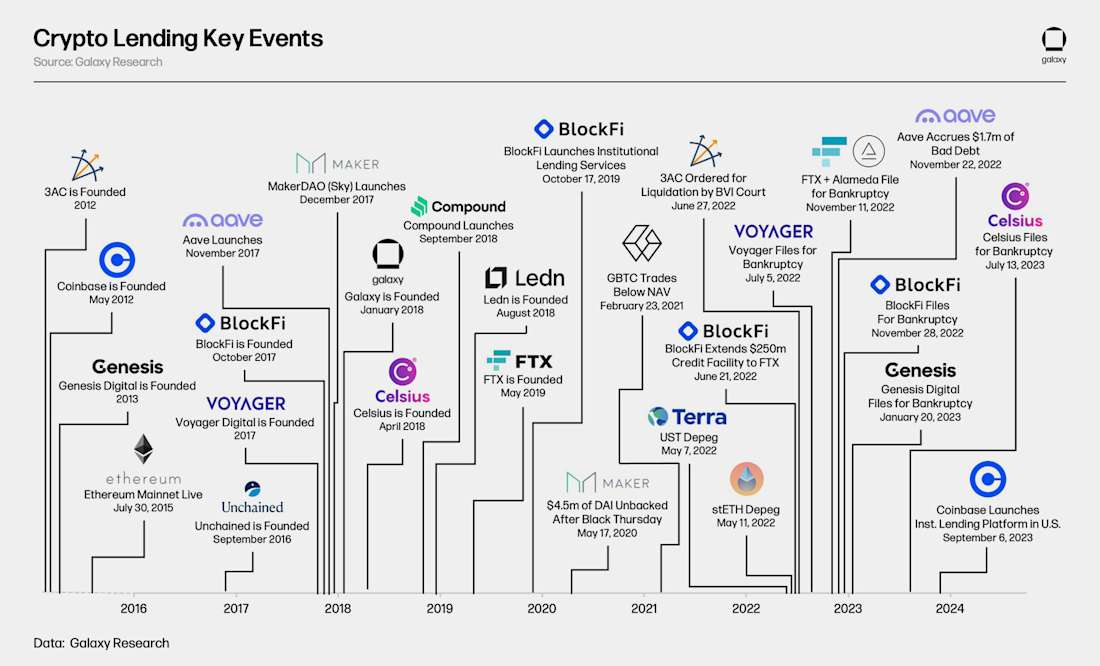
Is crypto lending legit? Yes, but it carries higher risk than traditional banking. Legitimate platforms operate with regulated entities or transparent smart contracts, but they are not FDIC insured. The 2022 collapses of major lenders highlight the importance of due diligence. Always verify that a platform publishes regular proof-of-reserves and maintains a conservative LTV ratio to withstand market volatility.
What is the best crypto research site? For accurate market data, rely on primary sources like The Block, CoinGecko, or official exchange reports. These sources provide real-time data on interest rates, TVL, and platform solvency. Avoid unverified blogs for critical financial decisions. Cross-referencing data across multiple official sources helps identify discrepancies and potential risks in the lending ecosystem.
No comments yet. Be the first to share your thoughts!