Crypto lending market research: current scale
The crypto lending market has expanded rapidly, moving from niche DeFi experiments to a multi-billion dollar infrastructure layer. According to Galaxy Research, crypto-collateralized lending reached an all-time high of $73.59 billion at the end of Q3 2025. This milestone reflects a significant shift in how digital asset holders manage liquidity without liquidating their underlying holdings.
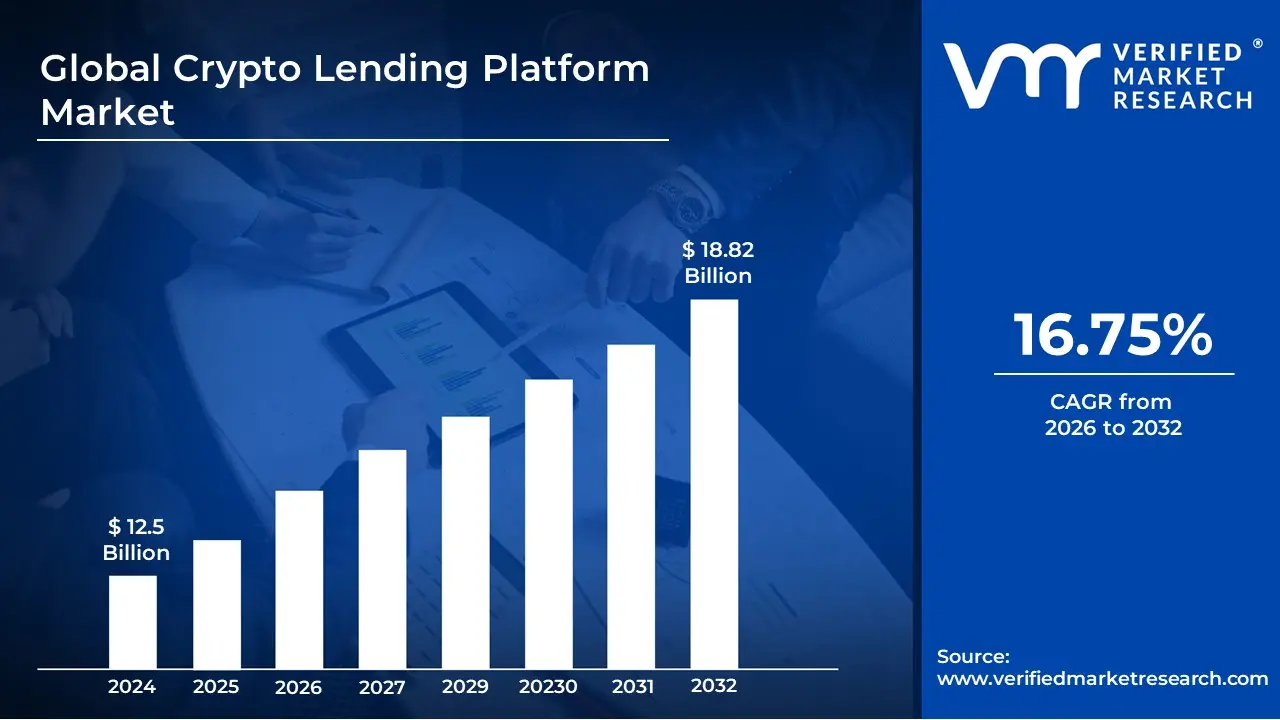
While total collateralized lending volumes hit record highs, the specific market for crypto lending platforms shows steady, structured growth. The platform market size is projected to grow from $10.68 billion in 2025 to $12.69 billion in 2026. This segment, which includes both centralized exchanges and decentralized protocols, is expected to reach $25.06 billion by 2030, growing at a compound annual growth rate of 18.5%.
These figures provide the baseline for understanding the current landscape. The divergence between total collateralized volume and platform revenue highlights the increasing sophistication of lending infrastructure. As the market matures, the focus shifts from raw growth to efficiency, security, and regulatory compliance within these lending platforms.
CeFi versus DeFi leverage dynamics
A practical choice should survive normal use, maintenance, timing, and budget. If a recommendation only works in an ideal situation, call that out plainly and give the reader a fallback path.
| Factor | What to check | Why it matters |
|---|---|---|
| Fit | Match the option to the primary use case. | A good deal still fails if it does not fit the job. |
| Condition | Verify age, wear, and service history. | Hidden condition issues erase upfront savings. |
| Cost | Compare purchase price with likely upkeep. | The cheapest option is not always the lowest-cost option. |
Key infrastructure metrics to track
The simplest way to use this section is to write down the must-have criteria first, then compare each option against those criteria before weighing nice-to-have features.
Building a data-driven lending strategy
Crypto Lending Market Research works best as a clear sequence: define the constraint, compare the realistic options, test the tradeoff, and choose the path with the fewest hidden costs. That order keeps the advice usable instead of decorative.
After each step, pause long enough to check whether the recommendation still fits the reader's actual situation. If it depends on perfect timing, unusual access, or a best-case budget, include a simpler fallback.
Common questions on crypto lending
Crypto lending has matured from a niche DeFi experiment into a structured institutional market. As the sector grows, investors and borrowers face more complex choices regarding security, regulation, and asset utility. Below are direct answers to the most frequent questions in crypto lending market research.
When evaluating crypto lending market research, it is essential to distinguish between custodial and non-custodial models. Custodial platforms hold your assets, offering easier user experiences but introducing counterparty risk. Non-custodial DeFi protocols give you control but require a deeper understanding of smart contract risks and gas fees. Always align your choice with your risk tolerance and regulatory environment.
No comments yet. Be the first to share your thoughts!